
Introduction
Business documents are essential records that help businesses manage daily operations, communicate with customers, track financial activities, and maintain important information. From invoices and receipts to contracts and business plans, these documents support better organization and help business owners make informed decisions.
Whether you run a small business, a startup, an online store, or an established company in India, understanding business documents can help you manage your work more efficiently. This guide explains the meaning of business documents, their common types, their importance, and practical ways to create, organize, and store them.
What Are Business Documents?
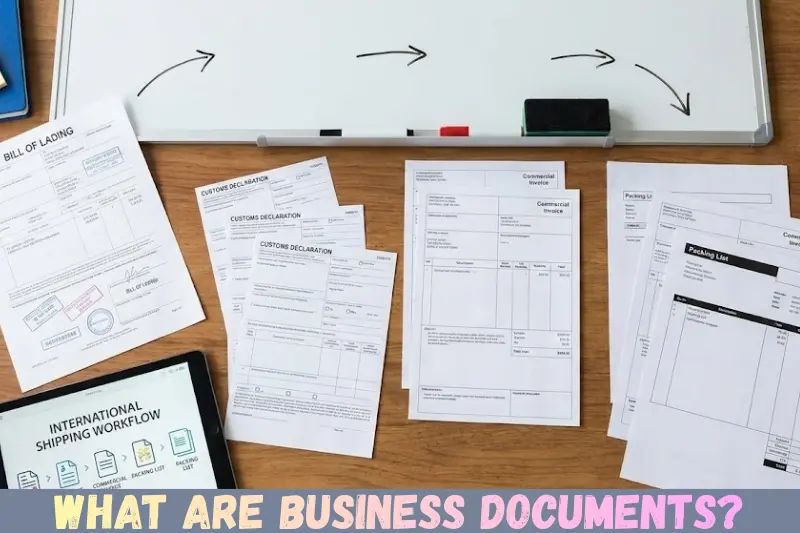
Business documents are written, printed, or digital records used to record, communicate, and manage business activities. They contain important information about transactions, agreements, employees, customers, finances, and company operations.
For example, when a business sells a product, it may create an invoice to request payment and issue a receipt after receiving the money. Both documents provide a record of the transaction.
Business documents may be used internally by employees and managers or externally by customers, suppliers, banks, government authorities, and other organizations.
Common examples include:
- Business plans
- Invoices and receipts
- Contracts and agreements
- Financial statements
- Purchase orders
- Employee records
- Meeting minutes
- Tax-related documents
- Sales reports
- Business proposals
The documents a business needs depend on its size, industry, legal structure, and operational requirements.
Why Are Business Documents Important?
Business documents help organizations maintain accurate records, communicate clearly, and manage their responsibilities. They also provide evidence of business activities and support financial planning.
1. They Maintain Accurate Records
Accurate documentation helps business owners track income, expenses, purchases, sales, and other activities. Organized records make it easier to review past transactions and identify missing information.
For example, a retailer can use invoices and purchase records to check which products were purchased from suppliers and how much was paid.
2. They Support Business Decisions
Business owners need reliable information before making important decisions. Financial statements, sales reports, and business plans provide useful details about performance, costs, and future opportunities.
By reviewing these records, managers can identify areas that require improvement and plan their budgets more effectively.
3. They Improve Communication
Business documents help communicate expectations, responsibilities, prices, deadlines, and agreed terms.
A written proposal, for instance, allows a potential customer to understand the services offered, expected costs, and project timeline before accepting the offer.
4. They Help Resolve Disputes
Invoices, signed agreements, receipts, and written correspondence can help establish what happened during a business transaction.
If a customer disputes a payment, the business may refer to its invoice, receipt, payment confirmation, and relevant communications to investigate the issue.
The usefulness of these records depends on their accuracy, authenticity, and relevance to the dispute.
5. They Support Legal and Tax Compliance
Businesses may need to maintain particular documents to meet applicable legal, accounting, employment, and tax requirements.
In India, for example, eligible businesses may need to maintain GST invoices and related records under applicable GST rules. Companies may also have statutory record-keeping responsibilities under the Companies Act and other relevant laws.
Requirements vary according to the business structure and circumstances, so businesses should confirm their specific obligations with a qualified professional.
Types of Business Documents
Different business documents serve different purposes. Understanding these categories helps business owners identify which records they need for daily operations.
1. Business Plans
A business plan describes a company’s goals, products or services, target customers, market opportunities, financial expectations, and operational strategy.
It helps business owners understand how they intend to establish, manage, or grow their businesses.
A typical business plan includes:
- Executive summary
- Business description
- Market analysis
- Products or services
- Marketing strategy
- Operational plan
- Financial projections
For example, someone planning to open a clothing store may prepare a business plan to estimate startup expenses, identify target customers, and plan marketing activities.
2. Invoices
An invoice is a document issued by a seller to request payment for goods or services supplied or agreed upon.
It generally includes the seller’s details, customer information, invoice number, issue date, description of goods or services, prices, applicable taxes, and payment terms.
Businesses use invoices to manage payments and maintain sales records.
In India, GST-registered businesses must follow the applicable invoicing rules for their transactions. The information required can differ depending on the transaction and taxpayer category.
3. Receipts
A receipt confirms that a payment has been received.
It usually identifies the payer, the recipient, the amount paid, the payment date, and the reason for payment.
For example, a customer may receive a receipt after paying a repair shop for vehicle servicing.
Receipts help both parties verify payments and maintain transaction histories. Businesses should store receipts alongside related invoices and accounting records where appropriate.
4. Contracts and Agreements
Contracts and agreements record the terms accepted by two or more parties.
They may cover services, employment, partnerships, property rentals, supply arrangements, confidentiality, or other business relationships.
A business agreement may include:
- Names of the parties
- Scope of work
- Payment terms
- Responsibilities
- Deadlines
- Confidentiality requirements
- Termination conditions
- Dispute-resolution provisions
For example, a marketing agency may use a service agreement to define deliverables, fees, revision limits, and project deadlines.
Businesses should obtain legal advice for significant agreements because enforceability and formal requirements depend on the applicable law and circumstances.
5. Purchase Orders
A purchase order is a document a buyer issues to specify the goods or services it wants to purchase from a supplier.
It may contain product descriptions, quantities, prices, delivery details, and other purchase conditions.
Purchase orders help businesses control purchasing activities and reduce misunderstandings about what has been ordered.
For example, a restaurant may issue a purchase order to a food supplier for a specified quantity of ingredients to be delivered on a particular date.
6. Financial Statements
Financial statements summarize important aspects of a business’s financial position and performance.
Common financial statements include:
- Balance sheet: Shows assets, liabilities, and equity at a particular date.
- Profit and loss statement: Reports income, expenses, and resulting profit or loss over a period.
- Cash flow statement: Shows cash inflows and outflows during a period.
These statements help owners, managers, lenders, and investors assess financial performance.
The specific financial statements required depend on the organization’s structure, accounting framework, and reporting obligations.
7. Employee Documents
Employee documents contain information related to hiring, employment, payroll, performance, and workplace administration.
Examples include appointment letters, employment agreements, attendance records, salary slips, leave records, and training documents.
Maintaining appropriate employee records helps businesses manage their workforce and administer employment responsibilities.
Because these records can contain personal information, access should be restricted to authorized individuals and handled in accordance with applicable privacy and employment requirements.
8. Business Proposals
A business proposal presents a suggested product, service, project, or solution to a potential customer or business partner.
It explains what the business offers, how the proposed work will be completed, and what the customer can expect.
A useful proposal often includes:
- Client requirements
- Proposed solution
- Scope of work
- Project timeline
- Pricing
- Expected deliverables
- Terms and conditions
For example, a web development company may submit a proposal describing the cost, features, timeline, and maintenance arrangements for a new website.
9. Meeting Minutes
Meeting minutes provide a written record of the main discussions, decisions, and action items from a meeting.
They may include the meeting date, attendees, topics discussed, decisions made, assigned responsibilities, and deadlines.
Meeting minutes help teams remember agreed actions and follow up on outstanding tasks.
For formal company meetings, specific statutory requirements may apply to how minutes are prepared, approved, and maintained.
10. Tax Documents
Tax documents help businesses calculate, report, and support their tax obligations.
Depending on the business, these may include tax invoices, expense records, tax returns, payment challans, and supporting financial statements.
Indian businesses should identify the tax documents relevant to their activities, such as GST records where applicable and income tax records.
Keeping supporting documents organized makes it easier to prepare returns, answer queries, and work with accountants or tax professionals.
Essential Business Documents for Small Businesses in India
Small businesses do not necessarily need every document used by large companies. However, maintaining a suitable set of records can make daily management easier.
The following documents are useful starting points.
| Document | Main purpose |
|---|---|
| Business plan | Defines goals and business strategy |
| Sales invoices | Records sales and requests payment |
| Receipts | Confirms payments received |
| Expense records | Tracks business spending |
| Purchase orders | Documents purchasing requirements |
| Bank statements | Records banking transactions |
| Contracts | Records agreed terms and responsibilities |
| Tax records | Supports tax reporting and compliance |
| Employee records | Manages employment-related information |
| Sales and financial reports | Helps monitor business performance |
Not every business will require all these documents. A sole proprietor, a partnership firm, a private limited company, and a GST-registered business may have different documentation needs.
Before preparing or filing official documents, check the requirements applicable to your business.
How to Create Effective Business Documents
Creating professional business documents requires clear information, consistent formatting, and careful review. A simple process can reduce mistakes and make records easier to understand.
Step 1: Identify the Purpose
Start by deciding why the document is needed and who will use it.
An invoice, for example, needs clear payment information, while a business proposal should explain a suggested solution and its benefits.
Step 2: Include the Necessary Information
Add the details relevant to the document’s purpose.
For an invoice, this may include the seller’s details, invoice number, date, customer information, item descriptions, amounts, and applicable taxes.
For an agreement, it may include the parties, responsibilities, payment conditions, and agreed deadlines.
Step 3: Use a Clear Format
Choose a simple layout with descriptive headings, readable text, and consistent spacing.
Use tables when they make information such as prices, quantities, and dates easier to understand. Avoid unnecessary design elements that distract from the content.
Step 4: Check the Information
Review names, dates, amounts, calculations, addresses, and other important details before sending or approving the document.
For documents involving tax, contracts, or formal reporting, check the relevant requirements and obtain professional assistance when necessary.
Step 5: Save and Share Securely
Save the final document in an appropriate format, such as PDF for a finalized document or an editable file for a working draft.
Share it only with the intended recipients. Use suitable permissions and secure storage, especially when the document contains financial, confidential, or personal information.
Digital Business Documents vs. Paper Documents
Businesses can maintain records on paper, electronically, or through a combination of both. The right approach depends on the document type, legal requirements, accessibility needs, and available resources.
| Feature | Digital documents | Paper documents |
|---|---|---|
| Accessibility | Can be accessed remotely when securely available online | Usually require physical access |
| Storage | Can reduce physical storage needs | Requires filing space |
| Searching | Often supports quick text searches | May require manual searching |
| Sharing | Can be shared electronically | May require physical delivery or scanning |
| Security | Requires access controls and cybersecurity measures | Requires physical protection and controlled access |
| Backup | Can be backed up electronically | May require duplicate copies or physical backups |
Digital records can improve efficiency, but they still need proper organization and protection. Businesses should also ensure that electronic records meet any applicable legal retention, authenticity, and accessibility requirements.
Paper documents may remain necessary for certain original records or situations where a specific form is required.
Best Practices for Managing Business Documents
Effective document management helps businesses find information quickly, avoid unnecessary duplication, and protect important records.
Organize Documents by Category
Create separate folders for invoices, receipts, contracts, employee records, tax documents, and financial statements.
For digital files, use descriptive folder names that reflect the business’s activities.
Use Consistent File Names
A clear naming system makes documents easier to find.
For example:
Invoice_2026_001.pdfSupplier_Agreement_2026.pdfMonthly_Expenses_September_2026.xlsx
Avoid vague names such as New Document or Final File 2.
Keep Records Updated
Update documents when relevant information changes. Review customer details, supplier agreements, employee records, and financial records regularly.
Clearly distinguish drafts from approved or signed versions.
Maintain Backups
Keep appropriate backups of important electronic records. Depending on the business’s needs, these may include secure cloud storage and a separate backup location.
Test whether files can actually be restored rather than assuming that a backup is usable.
Control Access
Not every employee needs access to every business document. Limit access according to job responsibilities and protect confidential records.
Use strong authentication where available, review sharing permissions, and remove access when it is no longer needed.
Follow Retention Requirements
Different records may have different legal retention periods. Do not delete documents simply because they are old.
Establish a retention schedule based on applicable laws, contractual obligations, operational needs, and professional advice.
Common Mistakes to Avoid When Handling Business Documents
Even a well-organized business can face problems if its records are incomplete or poorly managed.
1. Missing Important Details
Incorrect dates, incomplete descriptions, missing signatures where required, or inaccurate amounts can create confusion.
Review each document before finalizing it.
2. Keeping Disorganized Records
Saving files in random folders or maintaining multiple versions without clear labels makes information difficult to locate.
Use consistent folders and naming conventions.
3. Ignoring Security
Sharing confidential contracts or employee records through unrestricted links can expose sensitive information.
Use appropriate permissions and secure methods of sharing.
4. Failing to Back Up Records
Accidental deletion, device damage, or account problems can result in lost information.
Maintain reliable backups and periodically verify that they work.
5. Overlooking Legal Requirements
Using an unsuitable invoice format or failing to maintain required records can cause compliance problems.
Check the rules relevant to your business, especially for taxation, employment, corporate records, and regulated activities.
6. Deleting Documents Too Early
Old invoices, contracts, and supporting records may still be needed for audits, disputes, tax matters, or other legitimate purposes.
Apply an appropriate retention schedule before disposing of business records.
Tools You Can Use to Manage Business Documents
Businesses can use different tools to prepare, organize, and store documents. The most suitable choice depends on the size of the organization and the complexity of its processes.
Word Processing Software
Word processing applications help create business letters, proposals, agreements, reports, and other text-based documents.
Templates can save time and maintain consistent formatting.
Spreadsheet Software
Spreadsheets are useful for tracking expenses, preparing budgets, organizing sales data, and creating simple reports.
Businesses should use appropriate access controls and check formulas carefully when spreadsheets contain financial information.
Accounting Software
Accounting applications can help manage invoices, expenses, payments, and financial reports.
Some tools also support tax-related workflows. Confirm that the software meets your business’s needs and applicable Indian requirements before relying on it for compliance.
Cloud Storage and Document Management Systems
Cloud storage allows authorized users to access and share files from different locations. Document management systems may provide additional features such as version history, approval workflows, indexing, and permission controls.
Before choosing a platform, review its security features, backup options, data handling practices, and costs.
Frequently Asked Questions
1. What are business documents?
Business documents are records used to manage, communicate, and verify business activities. They include invoices, receipts, contracts, financial statements, business plans, and employee records. These documents help organizations track transactions, communicate responsibilities, maintain useful information, and support operational, financial, and legal requirements.
2. What are the most important business documents for a small business?
Important documents often include invoices, receipts, expense records, bank statements, contracts, tax records, and a business plan. Businesses with employees may also need employment and payroll records. The exact requirements depend on the business structure, industry, transactions, and applicable laws.
3. Are digital business documents legally valid in India?
Electronic documents can be legally recognized in India, subject to applicable laws and the circumstances in which they are created or used. However, not every document or transaction follows identical requirements. Some may need particular signatures, authentication, stamping, registration, or original records. Obtain professional advice when preparing important legal or statutory documents.
4. How should business documents be stored?
Business documents should be stored in an organized and secure system. Digital records can be arranged in clearly named folders with suitable access controls and reliable backups. Paper documents can be filed by category and date in a protected location. Follow applicable retention rules and restrict access to confidential information.
5. How long should a business keep its documents?
There is no single retention period for every business document. The required period depends on the document type, applicable tax and corporate laws, contractual obligations, and possible disputes. Businesses should create a record-retention schedule and confirm relevant requirements with a qualified accountant or legal professional before deleting important records.
Conclusion
Business documents play an important role in Taccurate records, managing finances, communicating with customers, and supporting business operations. From invoices and receipts to contracts, tax records, and financial statements, each document serves a specific purpose.
For businesses in India, the right documentation system should reflect the organization’s size, activities, and legal responsibilities. Start by identifying the records your business uses most often, organizing them into clear categories, and establishing consistent procedures for reviewing, storing, backing up, and protecting them.