
Introduction
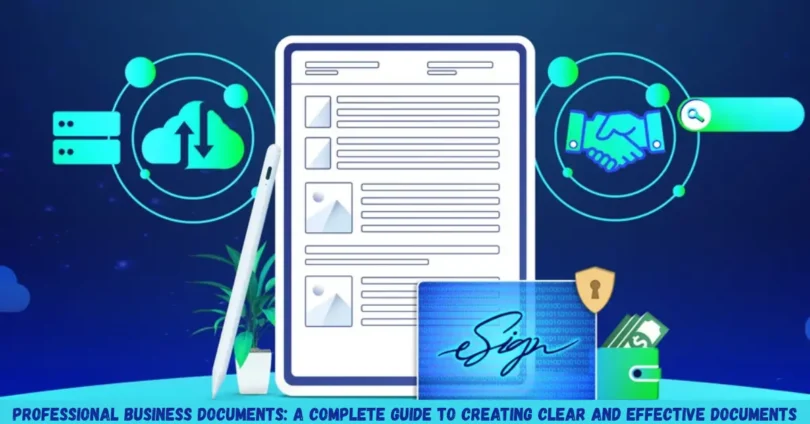
Professional business documents are essential for communicating clearly, sharing information, managing daily operations, and building trust with clients, employees, and business partners. Whether you run a small business, work in an office, manage a startup, or operate a large company in India, well-prepared documents help you present information accurately and professionally.
From business proposals and invoices to reports, contracts, and meeting minutes, every document serves a specific purpose. Understanding how to prepare these documents can save time, reduce misunderstandings, and improve business relationships.
This guide explains the different types of professional business documents, their uses, key benefits, practical steps for creating them, and common mistakes to avoid.
What Are Professional Business Documents?
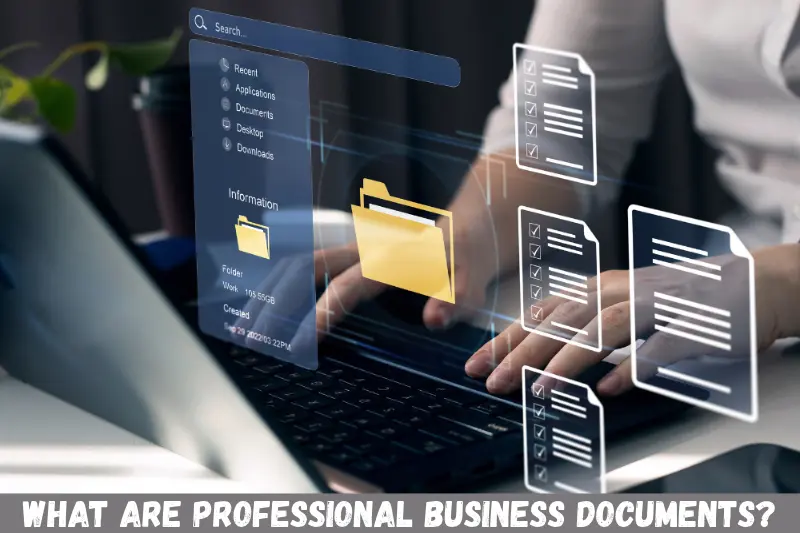
Professional business documents are written or digital materials used to communicate business information, record transactions, explain decisions, and support professional activities. They follow an appropriate structure, use clear language, and present information in a format suitable for the intended audience.
These documents may be shared internally with employees and managers or externally with customers, suppliers, investors, government departments, and other organizations.
Examples include:
- Business letters and emails
- Business proposals and plans
- Invoices and payment receipts
- Financial reports
- Employment contracts and agreements
- Project reports and presentations
- Meeting agendas and minutes
- Company policies and procedures
A professional document should be accurate, easy to understand, properly formatted, and appropriate for its intended purpose.
Why Are Professional Business Documents Important?
Professional business documents help organizations maintain consistent communication and keep reliable records of important activities. They also provide a structured way to share information and explain business decisions.
1. Improve Business Communication
Clear documents help people understand instructions, expectations, deadlines, and responsibilities. For example, a detailed project brief can explain what a client expects, what the team must deliver, and when the work should be completed.
This reduces confusion and helps everyone work toward the same objectives.
2. Build a Professional Image
Well-organized documents create a positive impression of a business. Consistent formatting, correct spelling, clear headings, and accurate information demonstrate attention to detail.
This is particularly important when sending proposals, quotations, company profiles, or reports to potential clients and business partners.
3. Maintain Accurate Records
Businesses need records of financial transactions, agreements, employee responsibilities, and operational decisions. Documents provide a written reference that can be reviewed when questions arise.
For example, an invoice records the products or services provided, the amount payable, and the relevant payment details.
4. Support Better Decision-Making
Reports and business plans organize information so managers can evaluate performance, identify problems, and plan future activities.
A sales report, for instance, can help a business compare revenue across different periods and identify products that may require additional attention.
5. Help Manage Business Risks
Written agreements, documented procedures, and properly maintained records can help clarify responsibilities and reduce disputes. Certain documents may also be necessary for legal, regulatory, tax, or audit purposes.
However, creating a document does not automatically make it legally enforceable or guarantee compliance. Requirements depend on the document type and applicable Indian laws.
Common Types of Professional Business Documents
Different business activities require different documents. Choosing the right format makes communication more effective and helps ensure that important information is recorded properly.
1. Business Letters
Business letters are formal written communications used to contact customers, suppliers, organizations, and other professional contacts.
Common examples include:
- Inquiry letters
- Complaint letters
- Recommendation letters
- Appointment letters
- Request letters
- Thank-you letters
A professional business letter typically includes the sender’s details, date, recipient’s details, subject, greeting, main message, closing, and signature.
Example: A company may send a formal inquiry letter to a supplier requesting product specifications, prices, and delivery timelines.
2. Business Proposals
A business proposal explains a suggested service, project, partnership, or solution. Its purpose is to help the reader understand the offer and decide whether to accept it.
A strong proposal usually includes:
- An introduction to the business
- The client’s needs or problem
- The proposed solution
- Deliverables and timelines
- Pricing and payment terms
- Relevant experience or qualifications
- Next steps and contact information
For example, a digital marketing agency might prepare a proposal describing its SEO services, expected deliverables, project schedule, and professional fees.
The proposal should focus on the client’s requirements rather than making unrealistic promises.
3. Business Plans
A business plan explains what a company intends to achieve and how it plans to operate. It is useful for entrepreneurs, startups, business owners, and organizations planning expansion.
A typical business plan includes:
- Business overview
- Products or services
- Target market
- Competitor analysis
- Marketing and sales strategy
- Operational requirements
- Financial projections
- Potential risks and growth objectives
A practical business plan uses reasonable assumptions and clearly identifies estimates. It should not present uncertain revenue projections as guaranteed results.
4. Invoices and Payment Receipts
Invoices and receipts are important financial documents used to record transactions.
An invoice generally requests payment for products or services supplied. A receipt confirms that a payment has been received.
An invoice may include:
- Seller and buyer details
- Invoice number and date
- Description of products or services
- Quantity and price
- Applicable taxes
- Total amount payable
- Payment terms
Businesses registered under India’s GST system must follow the applicable invoicing requirements for their transactions. The required details can vary depending on the type of supply and the relevant rules.
5. Business Reports
Business reports present information about performance, activities, challenges, or results. They help managers and stakeholders understand a situation and decide what action to take.
Common report types include sales reports, financial reports, project progress reports, market research reports, and operational reports.
An effective report should explain its purpose, present relevant information, summarize important findings, and recommend practical actions where appropriate.
For example, a monthly sales report may compare targets with actual sales, identify changes in customer demand, and suggest improvements to the sales process.
6. Contracts and Business Agreements
Contracts and agreements describe the terms agreed upon by two or more parties. They may cover services, employment, partnerships, purchases, confidentiality, or other business arrangements.
Important elements can include:
- Names and details of the parties
- Scope of work or agreed responsibilities
- Fees and payment terms
- Duration and deadlines
- Confidentiality requirements
- Termination conditions
- Dispute resolution provisions
- Signatures and other applicable formalities
Not every agreement has the same legal requirements. Businesses should obtain qualified legal advice for significant transactions, complex arrangements, or documents that need to comply with specific Indian laws.
7. Meeting Agendas and Minutes
Meeting agendas and minutes help teams organize discussions and document decisions.
An agenda identifies the topics to be discussed before a meeting. Meeting minutes record key discussions, decisions, assigned tasks, and follow-up responsibilities.
For example, a project meeting’s minutes might record that the design team must submit a revised draft by Friday and the project manager will review it the following Monday.
These documents are especially useful when several employees or departments work on the same project.
8. Company Policies and Procedures
Company policies explain an organization’s rules, expectations, and principles. Procedures provide step-by-step instructions for completing specific tasks.
Examples include attendance policies, leave policies, data security policies, customer service procedures, and workplace safety guidelines.
Policies should be written in clear language and reviewed when business operations or applicable legal requirements change.
Essential Elements of a Professional Business Document
A professional business document should provide the right information in a clear and organized format. Although the exact structure depends on the document type, several elements are useful across many business situations.
Clear Title and Purpose
The title should immediately tell readers what the document covers. A proposal, invoice, report, and employment agreement should each have an appropriate title.
The opening section should explain the purpose so readers can understand why the document was prepared.
Accurate and Relevant Information
Every name, date, amount, reference number, and factual statement should be checked before the document is shared.
Unnecessary information should be removed so the reader can focus on the details that matter.
Logical Structure
Use headings, subheadings, numbered steps, and bullet points where appropriate. Organize related information together and place the most important details where readers can find them easily.
Long paragraphs and inconsistent formatting can make even accurate documents difficult to understand.
Professional Language and Tone
Use polite, direct, and respectful language. Avoid slang, unclear abbreviations, unnecessary jargon, and overly complicated sentences.
The tone should match the audience. A legal agreement may require precise formal language, while an internal project update can be more conversational.
Consistent Formatting
Use consistent fonts, heading styles, spacing, margins, and alignment. If a company has approved branding guidelines, follow them.
For external documents, include relevant business details and contact information when appropriate.
Review and Approval
Before sharing a document, check spelling, grammar, calculations, dates, attachments, and formatting. Documents involving money, legal commitments, or sensitive information may require approval from an authorized person.
How to Create Professional Business Documents Step by Step
Creating effective business documents becomes easier when you follow a consistent process.
Step 1: Identify the Purpose
Start by deciding what the document needs to achieve.
Ask yourself:
- What information must be communicated?
- Who will read the document?
- What should the reader understand or do after reading it?
- Is the document for internal use or external communication?
For example, an invoice needs to communicate payment details, while a business proposal needs to explain a solution and persuade the reader to consider it.
Step 2: Gather the Required Information
Collect the facts, figures, names, dates, supporting records, and other details needed to prepare the document.
Use reliable sources, verify important information, and distinguish confirmed facts from estimates or assumptions.
For financial documents, check calculations and applicable tax details carefully.
Step 3: Choose the Right Format
Select a format suited to the document’s purpose. A formal letter, spreadsheet, report, agreement, and presentation all serve different needs.
Common tools include Microsoft Word, Microsoft Excel, Google Docs, Google Sheets, and suitable business document templates.
Choose a file format that allows the recipient to review the document easily. PDF is often useful for sharing a finalized document because it helps preserve its layout.
Step 4: Write Clear and Concise Content
Organize the content into logical sections. Put essential information first and remove unnecessary repetition.
Use specific wording instead of vague statements.
For example, instead of writing, “The work will be completed soon,” write, “The first draft will be submitted by 20 October 2026,” if that deadline has been agreed upon.
Specific details help establish clear expectations.
Step 5: Apply Professional Formatting
Use a readable font, consistent heading styles, appropriate spacing, and a clean layout.
Make tables easy to read and ensure that important information is not hidden in crowded paragraphs.
For business documents shared with clients, a simple and consistent design is usually more effective than excessive colours or decorative elements.
Step 6: Check Accuracy and Completeness
Review the document before sending it.
Confirm that:
- Names and contact details are correct.
- Dates and deadlines are accurate.
- Financial calculations are correct.
- Required sections and attachments are included.
- Terms and responsibilities are clearly explained.
- Sensitive information is shared only with authorized recipients.
Ask another person to review important documents when appropriate.
Step 7: Save, Share, and Store the Document
Use a descriptive file name, such as Client_Service_Proposal_October_2026.pdf.
Store documents in an organized folder structure and limit access to authorized people. Maintain appropriate backups and version histories for important business records.
Follow applicable retention requirements, privacy obligations, and company policies when storing or deleting documents.
Best Tools for Creating Professional Business Documents
Several software tools can help individuals and businesses prepare professional documents. The best choice depends on the document type, budget, collaboration needs, and security requirements.
Microsoft Word
Microsoft Word is useful for business letters, reports, proposals, policies, and agreements. It provides formatting tools, templates, spelling checks, and collaboration features, depending on the version and plan.
Google Docs
Google Docs is useful for creating and editing documents online. It supports collaboration, comments, and sharing controls, making it suitable for teams that need to review content together.
Users should configure access permissions carefully when documents contain confidential information.
Microsoft Excel and Google Sheets
Spreadsheet tools are useful for financial summaries, invoices, budgets, tracking records, and business calculations.
They can reduce manual work, but formulas and figures still need to be checked for accuracy.
Canva
Canva can help create visually appealing company profiles, business presentations, proposals, and branded documents.
It is especially useful when presentation matters, although documents with complex legal or financial requirements may need more specialized tools.
PDF Tools
PDF tools help businesses combine files, add signatures where supported, compress documents, and prepare files for sharing.
Before using an online PDF service, review its privacy practices and avoid uploading sensitive business information to services that are not approved for that purpose.
Professional Business Documents for Small Businesses in India
Small businesses in India can benefit from simple, well-maintained documentation even when they do not have a dedicated administrative team.
The most useful documents depend on the nature of the business, its size, and its legal obligations.
Documents Every Small Business Should Consider
- Business plan to define goals and operational priorities.
- Quotations and proposals to communicate prices and services.
- Invoices and receipts to record transactions.
- Purchase orders to document purchasing requirements.
- Contracts or service agreements to clarify responsibilities.
- Employee records and relevant workplace policies.
- Financial statements and expense records.
- Customer records and service documentation.
Not every business needs every document in the same form. For example, a freelance designer may need proposals and service agreements, while a retailer may rely more heavily on invoices, purchase records, and inventory documentation.
Understand Applicable Indian Requirements
Depending on the business and transaction, documentation requirements may involve GST, income tax, employment rules, company law, or other applicable regulations.
Businesses should confirm which requirements apply to their particular circumstances instead of relying on a generic template for every situation.
For example, a GST-registered business should check the applicable invoice requirements for its supplies. A company entering into an important commercial agreement should consider professional legal review before signing.
Maintaining accurate records and reviewing them periodically can make routine administration more manageable.
Benefits and Limitations of Using Business Document Templates
Templates can save time and help maintain consistent formatting. However, they should be adapted to the actual needs of each business transaction.
Benefits of Templates
- Save preparation time: Start with an existing structure instead of creating every document from scratch.
- Improve consistency: Keep headings, layouts, and standard details uniform.
- Reduce omissions: Well-designed templates can remind users to include important information.
- Support teamwork: Employees can follow a shared document format.
- Simplify routine work: Frequently used invoices, reports, and letters become easier to prepare.
Limitations of Templates
- May not fit every situation: A generic template may not reflect the details of a particular transaction.
- Can contain outdated information: Tax details, policies, or legal clauses may change.
- May create a false sense of security: A template is not automatically legally compliant.
- Can encourage copying without review: Incorrect names, dates, or terms may remain in the final document.
The best approach is to use templates as starting points, verify the details, and obtain professional advice when the document requires specialized knowledge.
Common Mistakes to Avoid When Preparing Professional Business Documents
Even a well-designed document can cause problems if its content is inaccurate or unclear. Avoiding a few common mistakes can improve its quality considerably.
1. Using Unclear Language
Vague instructions can create confusion about deadlines, costs, and responsibilities. State what needs to happen, who is responsible, and when it must be completed.
2. Ignoring Spelling and Grammar
Typing mistakes and inconsistent wording can reduce readability and make a business appear less attentive to detail. Use proofreading tools and manually review the final version.
3. Forgetting Important Details
Missing invoice numbers, payment terms, dates, contact details, or attachments can delay business activities. Use a checklist for documents that are prepared frequently.
4. Using Inconsistent Formatting
Different fonts, irregular spacing, and poorly aligned tables can make documents harder to read. Follow a consistent formatting style throughout the document.
5. Sharing Confidential Information Carelessly
Business documents may contain personal details, customer information, financial records, or commercial terms. Use suitable access permissions and approved sharing methods.
6. Relying on Unverified Templates
A document downloaded from the internet may contain irrelevant clauses or outdated requirements. Review and customize it before use, particularly when legal or financial obligations are involved.
7. Failing to Maintain Updated Versions
Sending an outdated proposal or agreement can cause misunderstandings. Use clear file names, dates, and version numbers, and confirm that recipients receive the intended final version.
Tips for Maintaining High-Quality Business Documents
A reliable documentation process helps businesses maintain quality as their operations grow.
Follow these practical tips:
- Create standard templates for frequently used documents.
- Use consistent file names and folder structures.
- Review financial figures before issuing invoices or reports.
- Keep business contact details and standard company information updated.
- Establish approval procedures for important documents.
- Protect confidential files with appropriate access controls.
- Store final versions separately from drafts.
- Review policies and templates periodically.
- Keep records for the periods required by applicable rules.
- Train employees to follow the organization’s documentation standards.
Businesses can also use automation for routine tasks, such as generating invoice numbers or populating standard fields. However, automated outputs should be reviewed, especially when they involve money, personal information, contractual commitments, or regulatory requirements.
Frequently Asked Questions
1. What are professional business documents?
Professional business documents are written or digital records used to communicate information, manage business activities, and document transactions. Common examples include business letters, proposals, invoices, reports, contracts, meeting minutes, and company policies. They should be accurate, clearly structured, easy to understand, and appropriate for the people who will use them.
2. Which professional business documents are most important for small businesses?
Small businesses commonly need quotations, invoices, payment receipts, financial records, customer communications, and relevant agreements. Depending on their operations, they may also need employee records, purchase orders, business plans, and tax-related documents. The exact requirements depend on the business structure, industry, transactions, and applicable Indian regulations.
3. How can I create professional business documents for free?
You can create many business documents using free versions of tools such as Google Docs, Google Sheets, and Canva. Start with a suitable template, replace sample content with verified information, check the formatting, and proofread the final version. Before using online tools, review their sharing settings and privacy practices if your documents contain sensitive information.
4. What makes a business document look professional?
A professional document combines accurate information, clear language, logical organization, and consistent formatting. It should have an appropriate title, readable text, relevant details, and a tone suited to its audience. Proofreading, checking calculations, and removing unnecessary content also improve quality. The design should support readability rather than distract from the message.
5. Are business document templates legally valid in India?
A template is not automatically legally valid simply because it looks professional. Legal effectiveness depends on the document’s contents, the parties, applicable laws, and any required formalities, such as stamping, registration, or signatures. Businesses should verify the requirements for their specific situation and seek qualified legal advice when preparing important contracts or agreements.
Conclusion
Professional business documents help businesses communicate clearly, maintain reliable records, organize operations, and build stronger relationships with customers and partners. From invoices and business proposals to reports, agreements, and internal policies, every document should serve a clear purpose and contain accurate information.
To improve your documentation, start by identifying the documents your business uses most often. Create consistent templates, verify important details, protect confidential information, and review documents before sharing them. For legal, financial, and regulatory matters, confirm the applicable requirements before relying on a standard template.