
How to write a professional letter is an important skill for students, employees, job seekers, entrepreneurs, and business professionals. A well-written letter communicates your purpose clearly while creating a positive and professional impression.
Professional letters are commonly used in India for job applications, business enquiries, formal requests, complaints, resignations, recommendations, official communication, and communication with educational institutions or government offices.
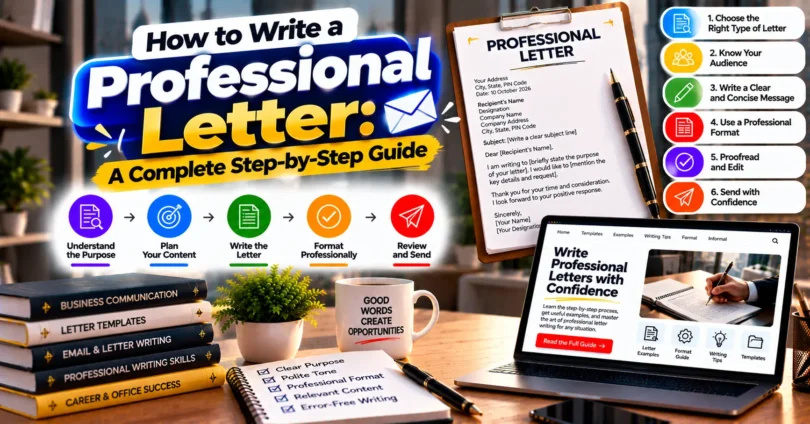
The basic process is simple: identify your purpose, choose the correct format, add the recipient’s details, write a clear subject, communicate your message concisely, and finish with an appropriate closing.
This guide explains the complete professional letter format, essential elements, writing steps, practical examples, useful tips, limitations, and common mistakes.
What Is a Professional Letter?
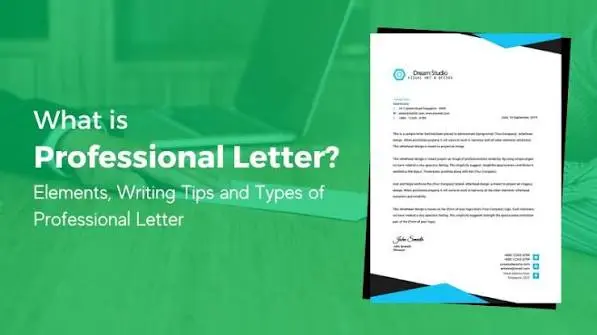
A professional letter is a formal written communication sent to an individual, company, institution, or organisation for an official or business-related purpose. It follows a structured format and uses respectful, clear, and concise language.
Unlike an informal message to a friend or family member, a professional letter normally avoids slang, casual expressions, unnecessary personal information, and excessive emotion.
Common types include:
- Job application letters
- Cover letters
- Resignation letters
- Business enquiry letters
- Complaint letters
- Request letters
- Recommendation letters
- Official notices
- Sales and partnership letters
- Letters to educational institutions
Although email has replaced many printed letters, traditional professional letter-writing principles remain highly relevant to email communication.
Why Is Professional Letter Writing Important?
Professional letter writing helps you communicate clearly, document important information, and present yourself appropriately to the recipient.
A carefully written letter can make your request easier to understand and reduce the possibility of confusion. It can also create a written record that may be useful for future reference.
Key Benefits of a Professional Letter
A professional letter can help you:
- Present information in an organised manner
- Create a professional first impression
- Communicate requests clearly
- Maintain a formal written record
- Demonstrate attention to detail
- Explain complex matters more effectively
- Build credibility in business communication
For example, if you are contacting a company about a service issue, a structured letter containing the relevant dates, order details, problem, and requested solution is generally easier to process than a vague message.
Professional Letter Format at a Glance
If you want to understand how to write a professional letter, first learn its basic structure.
| Section | What to Include |
|---|---|
| Sender Details | Your name, address, phone number, and email where appropriate |
| Date | Date the letter is written |
| Recipient Details | Recipient’s name, designation, company, and address |
| Subject | Short description of the letter’s purpose |
| Salutation | Formal greeting |
| Opening | Reason for writing |
| Main Body | Relevant details and explanation |
| Closing Paragraph | Requested action or next step |
| Sign-off | Formal closing phrase |
| Signature | Your name and relevant designation |
The exact format can vary depending on whether the letter is printed, attached as a document, submitted through an organisation’s system, or sent by email.
How to Write a Professional Letter Step by Step
Writing a professional letter becomes much easier when you follow a logical process rather than trying to write everything at once.
1. Identify the Purpose of Your Letter
Before writing, decide exactly what you want the letter to achieve.
Your purpose might be to request information, apply for a position, raise a complaint, resign from a role, propose a partnership, or ask an organisation to take a specific action.
Try summarising your purpose in one sentence.
For example:
“I am writing to request information about your business training programme.”
Having a clear objective prevents the letter from becoming unnecessarily long or confusing.
2. Add Your Contact Information
For a traditional business letter, place your relevant contact details near the top.
Depending on the context, these can include:
- Full name
- Postal address
- City and PIN code
- Email address
- Phone number
For business correspondence, you may also include your job title and company name.
Avoid including personal information that the recipient does not need.
3. Write the Date Correctly
Add the date on which you are sending or preparing the letter.
A clear format such as 10 October 2026 works well because it avoids confusion between different numerical date conventions.
The date is particularly useful when the letter concerns deadlines, applications, payments, complaints, agreements, or previous correspondence.
4. Include the Recipient’s Information
Next, add the details of the person or organisation receiving the letter.
Typically, this includes:
- Recipient’s name
- Professional title or designation
- Organisation name
- Business address
Check the spelling of the recipient’s name and company carefully. An incorrect name or designation can immediately make the letter appear careless.
5. Create a Clear Subject Line
The subject should explain the purpose of the letter in a few words.
Examples include:
Subject: Application for Marketing Internship
Subject: Request for Product Information
Subject: Complaint Regarding Order No. 45821
A specific subject helps the recipient understand and route your correspondence quickly.
6. Use an Appropriate Salutation
Begin with a respectful greeting.
If you know the recipient’s name, address them appropriately according to the context and their preferred professional title.
For example:
Dear Mr Sharma,
Dear Ms Kapoor,
If you do not know the individual’s name, a role-based greeting can sometimes be more useful:
Dear Hiring Manager,
Dear Customer Service Team,
Avoid overly casual greetings such as “Hey” in formal business correspondence.
7. Write a Direct Opening Paragraph
The opening paragraph should immediately tell the reader why you are writing.
For example:
“I am writing to enquire about the corporate training services offered by your organisation for small business teams.”
This is stronger than spending several sentences introducing unrelated background information before explaining your purpose.
Keep the opening brief and specific.
8. Explain the Necessary Details
The body of your letter provides the information the recipient needs to understand the situation and respond.
Focus on relevant facts.
If you are writing a complaint, for instance, you may include the purchase date, order reference, nature of the problem, steps already taken, and desired resolution.
Use separate paragraphs when discussing different points. This makes longer letters easier to scan.
9. State the Action You Want
Do not make the recipient guess what should happen next.
Clearly state your requested action when appropriate.
You could write:
“I would appreciate confirmation of the available programme dates and applicable fees.”
A specific request makes responding easier.
However, maintain a polite tone. Professional communication should be firm when necessary without becoming aggressive.
10. Finish With a Professional Closing
Your final paragraph should briefly reinforce the requested next step and thank the recipient where appropriate.
For example:
“Thank you for considering my request. I look forward to receiving your response.”
Then use a suitable sign-off, such as:
Yours sincerely,
Yours faithfully,
Regards,
Kind regards,
The appropriate choice depends on the letter’s format, recipient, and level of formality.
Professional Letter Example
Here is a simple example showing how the structure works in practice.
Rahul Mehta
Mumbai, Maharashtra
rahul@example.com
10 October 2026
The Hiring Manager
ABC Business Solutions
Mumbai, Maharashtra
Subject: Application for Business Operations Internship
Dear Hiring Manager,
I am writing to apply for the Business Operations Internship advertised by your organisation. I am currently completing my undergraduate studies and am interested in gaining practical experience in business operations and administration.
My academic work has helped me develop communication, organisation, research, and basic data-analysis skills. I am particularly interested in learning how business teams coordinate projects, manage information, and improve operational processes.
I have attached my résumé for your consideration. I would appreciate the opportunity to discuss how my skills and interest could contribute to your team.
Thank you for considering my application. I look forward to hearing from you.
Yours sincerely,
Rahul Mehta
This example works because it is direct, relevant, polite, and easy to scan.
How to Make a Professional Letter More Effective
An effective professional letter should be easy for the recipient to understand on the first reading.
Keep Your Language Simple
Professional writing does not require complicated vocabulary.
Instead of:
“We hereby wish to communicate our intention to make an enquiry pertaining to…”
Write:
“We are writing to enquire about…”
Simple language usually makes business communication clearer and more efficient.
Be Specific
Avoid vague requests such as:
“Please solve my issue quickly.”
A clearer version would be:
“Please confirm whether a replacement can be arranged and advise me of the expected processing time.”
Specific language helps the recipient understand what response you expect.
Maintain a Respectful Tone
Your tone should remain professional even when you are complaining or disagreeing with a decision.
Focus on facts, dates, documents, actions, and possible solutions rather than personal criticism.
Keep It Concise
Include everything necessary, but remove information that does not contribute to your purpose.
Many routine business letters can be communicated effectively within one page. More complex matters may require additional detail or supporting documents.
Common Mistakes to Avoid
Even a strong message can lose credibility because of avoidable presentation or writing mistakes.
Using an Unclear Subject
“Important” or “Request” provides little information.
Use something specific, such as:
Subject: Request for Internship Completion Certificate
Writing Long Paragraphs
Large blocks of text are difficult to scan. Keep paragraphs focused on one main point whenever possible.
Using an Overly Casual Tone
Slang, excessive emojis, abbreviations, and text-message language are usually inappropriate in formal correspondence.
Adding Unnecessary Details
More information does not automatically make a letter better. Include details that help the recipient understand the matter or take action.
Forgetting to Proofread
Check:
- Recipient’s name
- Dates
- Contact information
- Grammar
- Spelling
- Attachments
- Reference numbers
- Company name
If your letter says an attachment is included, confirm that you have actually attached it before sending.
Professional Letter vs Professional Email
Both formats serve similar purposes, but their presentation differs.
| Professional Letter | Professional Email |
|---|---|
| Often follows a traditional business layout | Uses email fields and a shorter layout |
| May include postal addresses | Usually does not require full postal addresses |
| Common for formal documentation | Common for everyday business communication |
| May include a handwritten or digital signature | Usually ends with an email signature |
| Often supplied as a printed document or PDF | Delivered directly through email |
The underlying writing principles remain similar: use a clear purpose, professional tone, concise paragraphs, accurate information, and an obvious next step.
Limitations of Professional Letters
Professional letters are useful, but they are not always the fastest communication method.
A formal letter may be unnecessary for a simple question that can be resolved through an official email, portal, or customer support channel.
Printed letters also take longer to deliver and process.
Before choosing the format, consider:
- Urgency
- Recipient preference
- Need for documentation
- Organisation’s communication policy
- Sensitivity of the information
- Whether supporting documents are required
For important matters, keep a copy of your correspondence and any supporting records.
Quick Checklist Before Sending Your Letter
Before sending, review your letter carefully.
- Is the purpose obvious from the opening?
- Is the recipient’s name correct?
- Is the subject specific?
- Have you included only relevant information?
- Is your requested action clear?
- Is the tone polite and professional?
- Are names, dates, and reference numbers accurate?
- Have you checked grammar and spelling?
- Are all mentioned attachments included?
- Have you provided appropriate contact information?
This final review can catch small errors that might otherwise affect the quality of your communication.
Frequently Asked Questions
1. How do you start a professional letter?
Start a professional letter with the appropriate sender and recipient information when required, followed by a clear subject and formal salutation. Your first paragraph should immediately explain why you are writing. Avoid lengthy introductions. A direct sentence such as “I am writing to request…” helps the reader understand your purpose immediately.
2. What is the correct format for a professional letter?
A standard professional letter generally includes sender details, date, recipient details, subject, salutation, opening paragraph, main body, closing paragraph, sign-off, and sender’s name. The exact layout may vary according to the organisation and whether the communication is printed, attached as a document, or sent electronically.
3. How long should a professional letter be?
A professional letter should be long enough to communicate all necessary information without unnecessary detail. Many routine letters fit comfortably on one page. However, complex complaints, proposals, legal matters, or detailed requests may require additional space. Clarity and completeness are more important than following an arbitrary word count.
4. Can I use “Dear Sir/Madam” in a professional letter?
“Dear Sir/Madam” is traditionally used when the recipient’s identity is unknown, but a specific name or relevant role is often preferable when available. For example, “Dear Hiring Manager” or “Dear Customer Service Team” can provide clearer context while remaining professional. Always follow an organisation’s stated communication requirements when provided.
5. What should I avoid in a professional letter?
Avoid slang, unnecessary jargon, emotional accusations, spelling mistakes, vague requests, excessive personal details, and overly long paragraphs. You should also avoid making claims you cannot support. Focus on accurate facts, relevant context, a respectful tone, and the specific action you would like the recipient to take.
Conclusion
Learning how to write a professional letter is valuable for business, education, employment, and official communication. A successful letter does not need complicated language. It needs a clear purpose, logical structure, accurate information, professional tone, and specific next step.
Begin by identifying what you want to achieve. Add the appropriate sender and recipient information, write a precise subject, explain your purpose early, provide only the necessary details, and finish with a polite call to action.
Before sending the letter, proofread it carefully and verify names, dates, contact information, references, and attachments. That final check can turn an ordinary message into polished professional communication.