
Introduction
Business document templates help businesses create professional, consistent, and well-organized documents without starting from scratch every time. From invoices and business proposals to contracts, reports, and official letters, these templates make everyday business tasks easier for startups, freelancers, small businesses, and established companies in India.
A well-designed business document template saves time, reduces formatting mistakes, and ensures important information is presented clearly. Whether you are launching a new business, managing clients, or handling administrative work, choosing the right templates can improve your workflow and create a more professional impression.
This guide explains the different types of business document templates, their benefits, how to use them, and what to consider when selecting templates for your business.
What Are Business Document Templates?
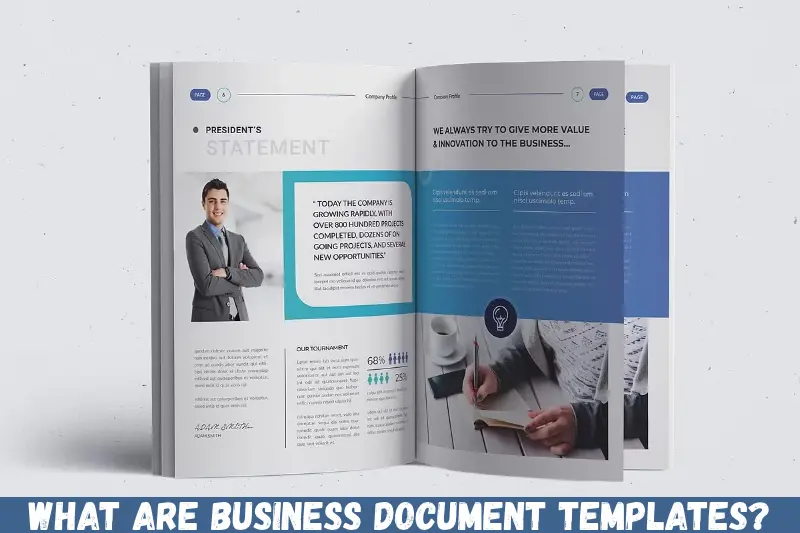
Business document templates are pre-designed document formats that businesses can reuse for common professional tasks. They include predefined headings, sections, layouts, and placeholders that users can customize with their own information.
For example, an invoice template may include spaces for the business name, customer details, invoice number, item descriptions, taxes, and the total amount due. Instead of designing a new invoice for every customer, you can simply update the relevant information.
Common business document templates include:
- Business proposals
- Invoices and receipts
- Contracts and agreements
- Business plans
- Meeting agendas and minutes
- Financial reports
- Purchase orders
- Professional business letters
- Employee onboarding documents
- Project plans and progress reports
These templates are useful for businesses of different sizes and industries because they provide a consistent starting point for routine documentation.
Why Are Business Document Templates Important?
Business document templates make business administration more efficient by reducing repetitive work and improving consistency. They allow employees and business owners to focus more on important tasks instead of repeatedly formatting documents.
Save Time on Routine Tasks
Creating documents from scratch can take time, particularly when a business regularly prepares invoices, proposals, reports, or customer communications.
Templates eliminate the need to recreate the same structure for every document. You can select a suitable format, enter the required information, and review the finished document before sharing it.
Maintain a Professional Image
Consistent formatting helps a business present itself professionally. Documents that use the same logo, colours, fonts, and layout create a recognizable business identity.
For example, a consulting company can use matching templates for its proposals, invoices, and reports to maintain a consistent appearance when communicating with clients.
Reduce Common Errors
Templates can include predefined fields for important details, such as customer information, dates, payment terms, and document reference numbers.
These fields help users remember what information needs to be included. However, templates cannot guarantee accuracy, so figures, names, dates, and legal terms should always be checked before a document is finalized.
Improve Team Collaboration
When employees use approved business document templates, everyone follows a common format. This makes it easier to review documents, share information, and maintain records across departments.
Templates are particularly useful for growing businesses where multiple employees prepare similar documents.
Types of Business Document Templates
Different business activities require different documents. Selecting the appropriate template helps ensure that information is organized according to the purpose of the document.
1. Business Proposal Templates
A business proposal template helps you present a product, service, project, or partnership opportunity to a potential client or business partner.
A typical proposal includes:
- Business introduction
- Client requirements
- Proposed solution
- Scope of work
- Estimated costs
- Project timeline
- Payment terms
- Terms and conditions
For example, a digital marketing agency in India can use a proposal template to explain its SEO services, expected deliverables, pricing structure, and project schedule.
2. Invoice Templates
An invoice template helps businesses request payment for products or services. It is commonly used by freelancers, retailers, consultants, agencies, and service providers.
A business invoice generally includes the seller’s details, customer information, invoice number, issue date, description of goods or services, applicable taxes, and payment instructions.
Businesses registered under GST should ensure that their tax invoices contain the particulars required by applicable GST rules. A generic invoice template may need to be customized to meet those requirements.
3. Business Contract Templates
Contract templates provide a structured starting point for documenting agreements between parties. They can be used for service arrangements, consulting work, vendor relationships, and other commercial activities.
Common sections include:
- Names and details of the parties
- Description of services or obligations
- Payment terms
- Deadlines and delivery conditions
- Confidentiality provisions, where relevant
- Termination conditions
- Dispute resolution provisions
- Signatures and dates
Contracts should be reviewed carefully before signing. A template may not address the specific legal requirements, risks, or circumstances of your transaction.
4. Business Plan Templates
A business plan template helps entrepreneurs organize their business ideas and explain how they intend to operate and grow.
A typical business plan covers the business concept, target customers, products or services, market analysis, marketing strategy, operational requirements, and financial projections.
For a new business in India, this template can help organize startup costs, expected revenue, customer acquisition plans, and funding requirements.
5. Business Report Templates
Business report templates help teams present findings, performance results, and recommendations in a consistent format.
They are useful for monthly sales reports, financial summaries, project updates, operational reviews, and management presentations.
A good report template usually includes a title, reporting period, summary of findings, relevant figures, key observations, and recommended actions.
6. Business Letter Templates
Business letter templates provide a standard structure for formal written communication with clients, suppliers, employees, and other organizations.
Common examples include request letters, complaint letters, quotation letters, payment reminders, confirmation letters, and business introduction letters.
Using a standard format makes correspondence easier to prepare and helps ensure that the purpose of each letter is clear.
7. Purchase Order Templates
A purchase order template helps businesses document requests to purchase goods or services from suppliers.
It generally includes the purchase order number, supplier details, product descriptions, quantities, prices, delivery requirements, and payment terms.
Purchase orders are particularly useful for businesses that regularly buy inventory, office supplies, raw materials, or equipment.
Benefits of Using Business Document Templates
Using business document templates can improve efficiency and consistency across different business operations.
The main benefits include:
- Greater efficiency: Prepare frequently used documents more quickly.
- Consistent formatting: Maintain the same structure across business communications.
- Improved organization: Keep essential information in predictable locations.
- Easier staff training: Help employees follow established documentation practices.
- Fewer omissions: Use predefined sections to identify missing information.
- Stronger branding: Apply consistent logos, fonts, and brand colours.
- Simpler document management: Make documents easier to categorize, review, and retrieve.
The benefits depend on how well templates are designed and maintained. Outdated templates or poorly completed fields can create confusion instead of reducing it.
How to Choose the Right Business Document Templates
The best business document templates are easy to use, appropriate for your industry, and flexible enough to accommodate your requirements.
Step 1: Identify Your Business Needs
Start by listing the documents your business prepares most frequently.
A freelancer may need invoices, proposals, and service agreements. A retail business may require purchase orders, invoices, stock reports, and supplier correspondence.
Prioritize templates that solve regular business problems rather than collecting formats you rarely use.
Step 2: Check the Template Structure
Choose a template that includes all the sections necessary for its intended purpose.
For example, a project proposal should provide space for the scope of work, pricing, deliverables, and deadlines. An invoice should make the transaction details and payment information easy to understand.
Avoid layouts that are unnecessarily complicated or difficult to edit.
Step 3: Select an Appropriate File Format
Choose a file format that works with your existing software and workflow.
Microsoft Word and Google Docs are useful for editable letters, proposals, and reports. Excel and Google Sheets are suitable for structured tables and calculations. PDF is useful for sharing finalized documents while preserving their layout.
For documents requiring multiple reviewers, consider tools that support collaboration and version history.
Step 4: Customize Your Branding
Add your business name, logo, contact information, and appropriate brand colours where relevant.
Keep the layout clean and readable. Professional documents should prioritize clarity rather than excessive decoration.
Step 5: Review Legal and Business Requirements
Check whether the document needs specific clauses, tax information, approvals, or other mandatory details.
This is especially important for employment documents, commercial contracts, tax invoices, and financial records in India.
Seek qualified professional advice when the document has significant legal, tax, or financial implications.
Step 6: Test Before Using the Template Regularly
Create a sample document and review it carefully.
Check calculations, spacing, headings, page breaks, placeholder fields, and the final appearance. If other team members will use the template, ask them to test it before making it the standard format.
Business Document Templates for Small Businesses in India
Small businesses in India can benefit from using a basic collection of templates for everyday operations. These documents support customer communication, financial administration, supplier management, and internal planning.
Useful templates include:
- Customer quotation templates
- Sales invoice templates
- Payment receipt templates
- Business proposal templates
- Service agreement templates
- Employee offer letter templates
- Leave application and approval templates
- Expense tracking sheets
- Purchase order templates
- Monthly business report templates
The appropriate selection depends on the nature of the business. A freelance designer may need only a few customer-facing documents, while a manufacturing business may require more extensive purchasing, inventory, quality, and operational records.
Businesses should also consider applicable Indian regulations when preparing tax invoices, employment documents, financial records, and legally significant agreements. A reusable template should be reviewed whenever relevant requirements change.
Free vs Paid Business Document Templates
Both free and paid business document templates can be useful. The right option depends on your budget, customization requirements, and the complexity of your business activities.
| Feature | Free Templates | Paid Templates |
|---|---|---|
| Initial cost | Usually free | Usually require payment |
| Basic formatting | Often available | Often available |
| Customization | Varies by template | Varies by provider |
| Design options | May be limited | May offer additional layouts |
| Support | Depends on the source | May be included |
| Business suitability | Suitable for many routine tasks | May suit specialized requirements |
Free templates are often sufficient for everyday documents such as letters, basic reports, and simple proposals. Paid templates may be worth considering when you need specialized layouts, advanced functionality, or a coordinated collection of business documents.
Before using any template, review its licence and usage terms, particularly if you plan to distribute it commercially or include it in a product you sell.
Common Mistakes to Avoid When Using Business Document Templates
Templates can simplify documentation, but careless use can introduce errors and unnecessary risks.
Using the Same Template for Every Purpose
An invoice, contract, business proposal, and financial report serve different purposes. Using one generic format for every document may result in missing information or an unsuitable structure.
Choose a template designed for the task.
Forgetting to Replace Placeholder Text
Templates may contain sample names, dates, prices, or instructions. Leaving these details unchanged can make a document look unprofessional and cause misunderstandings.
Review every field before sending or signing the document.
Ignoring Legal and Tax Requirements
A downloaded template may not satisfy the requirements that apply to your business or transaction.
Check relevant regulations and obtain professional advice when necessary. This is particularly important for GST documentation, contracts, and employment-related records.
Using Inconsistent Versions
When different employees use outdated copies of the same template, documents may contain conflicting information or formatting.
Maintain a central, approved version and clearly identify the latest revision.
Sharing Sensitive Information Carelessly
Business documents may contain customer details, employee information, commercial terms, or financial data.
Store files securely, limit access to authorized people, and use appropriate sharing permissions when working with cloud-based documents.
Best Practices for Managing Business Document Templates
A simple document management process helps businesses get more value from their templates.
Follow these practical tips:
- Create a central folder: Store approved templates in one accessible location.
- Use descriptive filenames: Identify each template by its purpose and, where useful, its version.
- Standardize essential fields: Keep business names, contact information, and other recurring details consistent.
- Review templates periodically: Update outdated content, branding, and applicable business requirements.
- Protect important documents: Apply suitable access controls to confidential information.
- Keep finalized records separate: Store completed documents separately from blank templates.
- Train employees: Explain when to use each template and how to complete it correctly.
These practices make it easier to maintain reliable documentation as a business grows.
Frequently Asked Questions
1. What are business document templates used for?
Business document templates are used to create recurring business documents quickly and consistently. Common examples include invoices, proposals, contracts, reports, purchase orders, and formal letters. They provide a predefined structure that users can customize with relevant information, reducing repetitive formatting work and helping businesses maintain professional documentation.
2. Where can I find free business document templates?
You can explore free templates through established productivity software providers, including Microsoft Create and Google Docs template galleries. You can also find templates from reputable business resource websites. Before using a template, check its file format, customization options, licensing terms, and suitability for your business requirements.
3. Are business document templates suitable for small businesses in India?
Yes, business document templates can be useful for Indian startups, freelancers, shops, agencies, and other small businesses. They help organize invoices, quotations, proposals, expenses, and customer communications. However, templates for GST invoices, employment matters, and contracts should be checked against the requirements applicable to the specific business and transaction.
4. Can I customize business document templates with my company logo?
Yes, most editable business document templates allow you to add your logo, business name, contact details, brand colours, and other relevant information. Microsoft Word, Google Docs, and similar tools support customization for many document types. Always check the final layout to ensure that branding does not make important information difficult to read.
5. Are free business document templates better than paid templates?
Neither option is automatically better. Free templates can be sufficient for common documents and businesses with straightforward needs. Paid templates may provide additional design choices, specialized formats, or support, depending on the provider. Compare the available features, licence terms, ease of editing, and suitability for your workflow before choosing.
Conclusion
Business document templates are practical tools for improving productivity, consistency, and organization. They help Indian businesses prepare everyday documents such as invoices, proposals, contracts, reports, and purchase orders without repeatedly creating each format from scratch.
To get the best results, select templates that match your business activities, customize them with accurate information, and review them regularly. Pay particular attention to legal, tax, and confidentiality requirements when preparing important documents.