
Introduction
Agreement document template India is a useful starting point for individuals, businesses, landlords, tenants, freelancers, and professionals who need to record the terms of an arrangement in writing. A well-prepared agreement helps both parties understand their responsibilities, payment terms, deadlines, rights, and obligations before they enter into a commitment.
Whether you need a rent agreement, business agreement, service agreement, partnership agreement, loan agreement, or freelance contract, choosing the right template can save time and make the drafting process easier. However, not every template is suitable for every situation. Some agreements may require specific clauses, stamp duty, registration, witnesses, or other formalities under applicable Indian law.
This guide explains what an agreement document template is, which types are commonly used in India, how to prepare one, what clauses to include, and how to avoid common mistakes. It also covers important legal considerations so you can select a suitable format for your requirements.
What Is an Agreement Document Template in India?
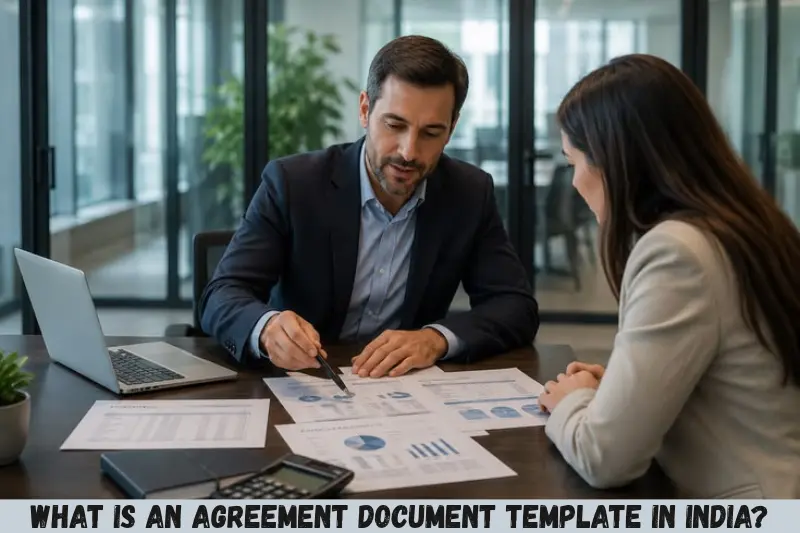
An agreement document template in India is a pre-designed document containing standard sections that parties can customize to record the terms of an agreement. It typically includes the parties’ details, purpose of the agreement, obligations, payment terms, duration, termination conditions, and signatures.
Instead of drafting an agreement from scratch, users can start with a suitable format and replace the sample information with their actual details.
For example, a landlord and tenant can use a rental agreement template to record the monthly rent, security deposit, property address, maintenance responsibilities, and duration of the tenancy.
Similarly, a small business can use a service agreement template to define the services it will provide to a client, the agreed fees, the delivery schedule, and the process for handling disputes.
A template provides a convenient starting point, but it does not automatically make an agreement legally enforceable. Its suitability depends on the terms, the circumstances, and compliance with applicable legal requirements.
Why Do You Need an Agreement Document Template?
A written agreement helps parties establish a shared understanding before starting a transaction or working relationship. A suitable template makes it easier to organize that information in a clear and consistent format.
1. Saves Time and Effort
A ready-made agreement format includes common sections that would otherwise need to be created manually. You can focus on entering the correct details and customizing the clauses instead of designing the entire document.
This is particularly helpful for routine arrangements, such as freelance projects, basic service contracts, or business transactions.
2. Clearly Defines Rights and Responsibilities
An agreement should explain what each party is expected to do. It can specify payment obligations, work requirements, delivery dates, property conditions, confidentiality duties, and other relevant responsibilities.
Clear wording helps reduce misunderstandings because both parties can refer to the same written terms.
3. Improves Documentation
A properly completed agreement creates a written record of the terms accepted by the parties. Depending on the nature of the transaction and applicable law, this record may help establish what was agreed upon if a disagreement arises.
Keeping signed copies and related payment records also makes it easier to manage ongoing obligations.
4. Supports Professional Communication
Businesses, consultants, freelancers, and service providers can use agreement templates to communicate their terms professionally. A consistent document structure helps clients understand pricing, deliverables, deadlines, and other expectations.
5. Makes Customization Easier
A good template can be adapted to different situations by adding or removing appropriate clauses. However, customization should reflect the actual transaction rather than simply replacing names and dates in a generic document.
Types of Agreement Document Templates Commonly Used in India
Different agreements serve different purposes. Selecting the correct format is important because the clauses needed for a rental arrangement may be very different from those required for a business partnership or professional service.
1. Rent Agreement Template
A rent agreement records the terms between a property owner and a tenant. It generally covers the property address, rent, security deposit, tenancy period, maintenance responsibilities, and conditions for ending the tenancy.
It is useful for residential and commercial rental arrangements. Before using a rent agreement template, check the applicable state requirements for stamp duty, registration, and tenancy documentation.
2. Business Agreement Template
A business agreement defines the terms of a commercial relationship between two or more parties. It may cover the supply of products, delivery of services, payment schedules, responsibilities, confidentiality, and dispute resolution.
For example, a supplier and a retailer can use a business agreement to document order quantities, prices, delivery schedules, and payment deadlines.
3. Service Agreement Template
A service agreement is used when an individual or business provides services to a client. It helps establish what work will be completed, how much it will cost, when it must be delivered, and how changes will be handled.
This format is suitable for consultants, digital marketers, designers, developers, agencies, and other service providers.
4. Partnership Agreement Template
A partnership agreement records the agreed terms between business partners. Depending on the business structure, it may cover capital contributions, profit and loss sharing, responsibilities, decision-making, withdrawal, and dissolution.
A carefully drafted agreement can help prevent disputes by establishing how important business decisions will be made. Partnership-specific legal requirements should be reviewed before signing.
5. Loan Agreement Template
A loan agreement documents money lent by one party to another. It can specify the principal amount, repayment dates, interest rate if applicable, payment method, default provisions, and any agreed security.
For example, two individuals lending money to each other may want a written record of the amount and repayment schedule. The terms should accurately reflect the transaction and comply with applicable law.
6. Employment Agreement Template
An employment agreement outlines the terms of employment between an employer and an employee. Common provisions include job responsibilities, compensation, working hours, leave, confidentiality, termination, and other applicable employment conditions.
Employers should ensure that the agreement complies with relevant employment laws and does not include unlawful or unenforceable restrictions.
7. Freelance Agreement Template
A freelance agreement establishes the working relationship between a freelancer and a client. It often covers project scope, deliverables, revisions, payment milestones, deadlines, ownership of work, confidentiality, and cancellation.
This type of agreement is particularly useful when a project involves several deliverables or payments at different stages.
8. Sale Agreement Template
A sale agreement records the terms under which a seller agrees to sell an item or property to a buyer. The required details depend on what is being sold.
For ordinary goods, the document may identify the product, price, delivery terms, and payment conditions. For immovable property, a simple generic sale agreement may be insufficient because specific property laws, registration rules, and transaction formalities may apply.
Essential Clauses to Include in an Agreement Document
A reliable agreement document template India should include clauses that clearly explain the arrangement and address likely problems. The exact provisions depend on the type of agreement.
1. Title and Date of the Agreement
Start with a clear title, such as “Service Agreement,” “Rent Agreement,” or “Business Partnership Agreement.”
Include the date on which the agreement is executed. If the agreement becomes effective on a different date, specify that date separately.
2. Details of All Parties
Identify each party accurately. Depending on the situation, include:
- Full legal name
- Residential or registered business address
- Relevant identification or registration details, where appropriate
- Designation and authority of a representative signing for a business
For a company, verify that the person signing has the necessary authority to bind it.
3. Purpose and Scope
Explain what the agreement is intended to accomplish. Use specific language rather than vague statements.
For example, a service agreement should describe the actual services, expected deliverables, project boundaries, and any exclusions.
4. Payment Terms
Clearly state the amount payable, payment schedule, payment method, applicable taxes, and any agreed late-payment consequences.
For a project worth ₹60,000, the parties might agree to pay ₹20,000 at the start, ₹20,000 after an approved milestone, and ₹20,000 on final delivery. This is an illustrative arrangement, not a mandatory payment structure.
5. Rights and Responsibilities
Describe what each party must do and what each party is entitled to receive.
For a rental agreement, this might include rent payments and maintenance duties. For a freelance contract, it could include delivery dates, client feedback, and access to project materials.
6. Duration and Renewal
Specify when the agreement starts, how long it lasts, and whether it can be renewed.
If renewal requires written consent or advance notice, state the procedure clearly.
7. Termination Conditions
Explain the circumstances in which the agreement may be ended. Relevant provisions may include notice periods, material breaches, failure to pay, and any opportunity to correct a breach.
The clause should also address outstanding payments, unfinished work, return of property, and other responsibilities after termination.
8. Confidentiality and Ownership
If the agreement involves confidential business information, personal data, creative work, software, or other intellectual property, clarify how that material may be used and who owns it.
Do not assume that payment automatically transfers every intellectual property right. The intended ownership and permitted uses should be documented appropriately.
9. Dispute Resolution
State how the parties will attempt to resolve disagreements. Depending on the transaction, the agreement may provide for negotiation, mediation, arbitration where legally appropriate, or proceedings before a competent court.
Any jurisdiction or dispute-resolution clause should be drafted with the applicable law and circumstances in mind.
10. Signatures and Witnesses
Provide signature fields for all required parties and, where appropriate or legally necessary, witnesses.
Include the signer’s printed name, designation if relevant, and date of signing. Witnesses, notarization, stamp duty, or registration may be required depending on the document and applicable law.
How to Create an Agreement Document Using a Template
Preparing an agreement becomes easier when you follow a consistent process. The objective is to create a document that reflects the actual arrangement rather than relying blindly on standard wording.
Follow these steps before signing your agreement.
Step 1: Identify the Type of Agreement
Determine what the parties are agreeing to do. Choose a template designed for that specific purpose, such as a rental agreement, service contract, loan agreement, or partnership document.
Avoid using a generic agreement when the transaction requires specialized legal provisions.
Step 2: Collect the Required Information
Gather the details needed to complete the document. These may include names, addresses, dates, amounts, property descriptions, work specifications, and payment schedules.
Verify the information against reliable records to reduce errors.
Step 3: Customize the Clauses
Replace sample text with terms that reflect the actual agreement. Remove irrelevant provisions and add any necessary clauses covering risks, responsibilities, and special conditions.
Make sure the clauses do not contradict each other.
Step 4: Review the Legal Requirements
Check whether the agreement must be written in a particular form, executed on appropriately stamped paper, witnessed, notarized, or registered.
Requirements can vary according to the type of document, the transaction, and the state or territory involved. Consult a qualified Indian lawyer when the consequences of an error could be significant.
Step 5: Check the Entire Document
Review the document for spelling errors, incorrect figures, missing clauses, inconsistent dates, and unclear responsibilities.
Pay particular attention to payment amounts, notice periods, termination conditions, and references to attached schedules or documents.
Step 6: Sign the Agreement Properly
Once all parties understand and accept the final wording, arrange execution in the legally appropriate manner. Keep a complete copy for each party and retain relevant supporting records.
If electronic execution is being considered, verify that the chosen signing method and document type meet the applicable legal requirements.
Agreement Document Template India: Sample Format
The following sample is a basic starting point for a straightforward agreement between two parties. It is not a universal legal form and should be adapted to the transaction before use.
GENERAL AGREEMENT
Sample agreement format for customization
Date: [DD/MM/YYYY]
Party One: [Full Legal Name and Address]
Party Two: [Full Legal Name and Address]
1. Purpose of Agreement
The parties agree to the following arrangement: [Describe the purpose and scope clearly].
2. Terms and Conditions
Both parties agree to perform their respective responsibilities as follows:
- Party One: [Responsibilities and obligations]
- Party Two: [Responsibilities and obligations]
3. Payment Terms
The agreed amount is ₹[Amount]. Payment shall be made according to the following schedule: [Insert payment dates and conditions, if applicable].
4. Duration
This agreement will commence on [Start Date] and remain effective until [End Date or completion of the agreed obligations], unless terminated earlier under its terms.
5. Termination
The agreement may be terminated under the following conditions: [Specify valid termination grounds, notice requirements, and consequences].
6. Confidentiality and Other Conditions
The parties agree to comply with the following additional terms: [Insert applicable confidentiality, ownership, liability, or other provisions].
7. Dispute Resolution
Any dispute will be addressed according to the dispute-resolution procedure agreed by the parties and applicable law.
8. Acceptance and Signatures
Both parties confirm that they have reviewed the terms and agree to them, subject to applicable law and any required formalities.
Party One
Name: ____________________
Signature: ____________________
Date: ____________________
Party Two
Name: ____________________
Signature: ____________________
Date: ____________________
Witnesses, if applicable
Witness One: ____________________
Witness Two: ____________________ Copy sample agreement
Important: This general format is not a substitute for a specialized rental, property sale, partnership, employment, or other regulated agreement. The sample does not establish that stamp duty, registration, witnessing, or other legal requirements have been satisfied.
Legal Requirements for Agreements in India
An agreement should not only be clear; it should also comply with the laws that apply to the transaction.
What Makes an Agreement Legally Valid?
Section 10 of the Indian Contract Act, 1872, sets out general requirements for agreements to qualify as contracts, including free consent, parties competent to contract, lawful consideration, and a lawful object, subject to the Act and other applicable laws.
India Code
+1
In practical terms, parties should check the following:
- Capacity: The parties must have the legal capacity to enter into the agreement.
- Free consent: Consent should not be improperly obtained through coercion, fraud, or other legally recognized grounds affecting consent.
- Lawful purpose: The arrangement and its object must comply with applicable law.
- Clear terms: Obligations should be sufficiently certain to understand and perform.
- Required formalities: Any applicable writing, signature, stamping, witnessing, or registration requirements must be followed.
A signed document does not automatically become enforceable simply because it contains these details. The actual facts, legal provisions, and nature of the transaction matter.
Is Stamp Paper Required for an Agreement in India?
The answer depends on the type of document and the applicable stamp law. Stamp duty requirements and rates may differ between states and types of instruments.
Before signing, verify the appropriate stamp duty, payment procedure, and any consequences of insufficient stamping under the relevant law. Do not assume that a particular stamp-paper value is correct for every agreement.
Is Registration Mandatory for Every Agreement?
No. Not every agreement requires registration, but certain instruments do.
For example, Section 17 of the Registration Act, 1908, identifies categories of documents for which registration is compulsory, including certain instruments affecting immovable property and specified leases. Applicable amendments and other laws may also affect the requirements.
India
+1
A property-related agreement should therefore be reviewed carefully before execution. The legal effect of a sale agreement, lease, conveyance, or other property document depends on its contents and the applicable rules.
Can You Sign an Agreement Online?
Electronic records and electronic signatures receive legal recognition under the Information Technology Act, 2000, subject to the Act’s provisions and exclusions. This does not mean that every type of agreement can be completed through any electronic-signing method without further formalities.
India Code
+1
Before signing online, check whether the transaction permits electronic execution, whether the selected signature method is appropriate, and whether any separate stamping, registration, or physical procedure is required.
Free Agreement Document Template India: What to Check Before Downloading
A free agreement template can be a useful option for routine documentation, provided that the format suits your needs and can be customized.
Before downloading or using a template, check the following points.
Choose a Template That Matches Your Situation
Look for a specific format instead of a broad document labelled simply “agreement.” A service contract, loan document, and rent agreement address different legal and practical issues.
Check the Source and Date
Prefer templates from credible legal, professional, or official sources where available. Review the document for outdated provisions, missing clauses, and references to laws that may no longer apply in their original form.
Review Editable Fields
A useful document should make it easy to update names, dates, amounts, schedules, and relevant clauses. Check that all placeholders are identified and that no sample details remain in the final version.
Review the File Format
Choose a format that you can review and edit comfortably, such as DOCX or another editable document format. A PDF may be suitable for reviewing a finalized document, but an editable version can make customization easier.
Protect Personal Information
Agreement documents may contain addresses, signatures, financial details, and other private information. Download files from trustworthy sources, avoid uploading sensitive documents to unknown websites, and share completed agreements only with authorized people.
Common Mistakes to Avoid When Preparing an Agreement
Even a professionally formatted document can cause problems if its terms are unclear or incomplete.
Using the Wrong Template
A generic document may not include provisions needed for a particular transaction. Choose a format based on the actual arrangement and obtain legal advice when specialized requirements apply.
Leaving Blank Spaces
Uncompleted fields can create uncertainty about dates, amounts, parties, and obligations. Fill in every relevant section and mark genuinely inapplicable provisions appropriately.
Using Vague Language
Phrases such as “payment will be made soon” or “work will be completed as required” can create disagreements.
Use specific dates, measurable deliverables, defined payment milestones, and clear responsibilities wherever possible.
Ignoring Stamp Duty and Registration
A document that has been signed may still face legal or procedural problems if mandatory formalities have not been followed. Check the applicable requirements before executing it.
Copying Clauses Without Understanding Them
A clause copied from another agreement may be unsuitable for your transaction or inconsistent with other provisions. Every clause should reflect the parties’ actual intentions and comply with applicable law.
Failing to Keep Signed Copies
Both parties should retain a complete copy of the executed agreement and any schedules or annexures incorporated into it. Maintain related payment records, correspondence, and amendments as appropriate.
Assuming Every Clause Is Enforceable
Some contractual terms may be invalid or restricted by law. For example, Section 27 of the Indian Contract Act addresses agreements in restraint of trade, subject to the statutory text and applicable legal interpretation.
Do not assume that adding a penalty, restriction, or waiver automatically makes it enforceable.
Tips for Creating a Clear and Professional Agreement
Use these practical tips to improve the quality of your agreement document.
- Use simple language: Write terms that both parties can understand without unnecessary legal jargon.
- Be specific: Clearly define responsibilities, payment deadlines, deliverables, and conditions.
- Use consistent terminology: Refer to each party by the same name or defined label throughout the document.
- Include supporting documents: Attach schedules, property descriptions, specifications, or payment plans when necessary.
- Document changes: Record amendments in the agreed manner instead of relying on informal verbal changes.
- Verify signatures: Confirm that the correct parties or authorized representatives have signed.
- Obtain professional advice: Seek guidance from a qualified lawyer for high-value transactions, property matters, complex commercial arrangements, or disputed terms.
These steps help make an agreement easier to understand, administer, and review.
Frequently Asked Questions
1. Where can I find an agreement document template India for free?
You can look for free agreement templates through reputable legal information websites, professional service providers, and trusted document-template platforms. Select a format that matches your transaction, such as a rental agreement or service contract. Before using it, check the clauses, state-specific requirements, and any applicable stamp duty or registration rules.
2. Is a simple agreement on plain paper legally valid in India?
A written agreement on plain paper may be legally valid in some circumstances, provided the applicable legal requirements are met. However, certain documents require proper stamping, registration, or other formalities. The answer depends on the transaction, the relevant state laws, and the document’s contents. Check these requirements before signing.
3. Can I create an agreement document online in India?
Yes, you can prepare an agreement online using an editable document template or document-creation tool. Enter the parties’ details, customize the clauses, review the terms, and arrange appropriate signatures. However, online preparation does not remove legal formalities. Check whether your particular agreement can be executed electronically and whether stamping or registration is required.
4. Does every agreement need to be notarized in India?
No, notarization is not mandatory for every agreement in India. Whether it is required or useful depends on the type of document, applicable legal provisions, and the purpose of the transaction. Notarization also does not automatically cure defects in an agreement or replace mandatory registration. Verify the requirements for your specific document before execution.
5. What should I check before signing an agreement?
Read the complete agreement and confirm that the parties’ details, payment terms, obligations, dates, termination conditions, and dispute-resolution provisions are accurate. Check for blank fields and conflicting clauses. Also verify applicable stamp duty, registration, and signature requirements. For complex or high-value transactions, have a qualified lawyer review the document before signing.
Conclusion
An agreement document template India provides a practical starting point for recording the terms of personal, professional, and business arrangements. The right template can help you organize responsibilities, payments, deadlines, and other important conditions in a clear format.
However, choosing a template is only the first step. You should customize the wording, verify the information, review the applicable legal requirements, and ensure that the agreement is properly executed. Stamp duty, registration, and electronic-signature rules may differ depending on the document and transaction.